Reading time: 6 minutes
Plastic vs. glass coverlens
There are basically two different types of cover lens material: glass and plastic. The decisive factor in deciding between the two materials is usually the desired hardness. Nowadays, glass cover lenses are mostly used due to various factors, which is why they are also called cover lenses.
What to expect: In this blog article, we will discuss the different materials available on the market, show you what advantages or disadvantages they have, and discuss together which cover lens is the best solution for your display and application.
Glass Materials
We would now like to take a closer look at the two most common material categories used for cover glass:
Soda-Kalk-Glas
Soda-lime glass is the most commonly produced type of glass.
Aluminum silicate glass
This glass has characteristic resistance to high temperatures and chemical influences.
Glass Hardening Process
Heat tempered glass
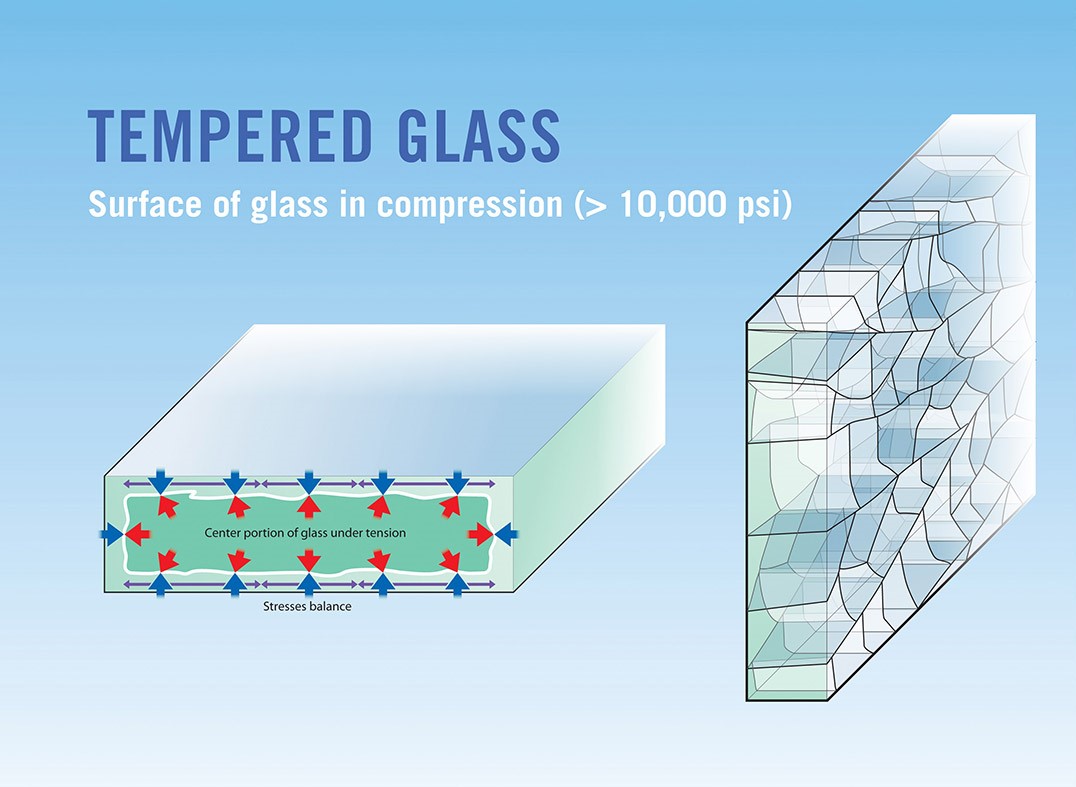
Quelle: https://glassed.vitroglazings.com/topics/heat-strengthened-vs-tempered-glass
Heat treated glass
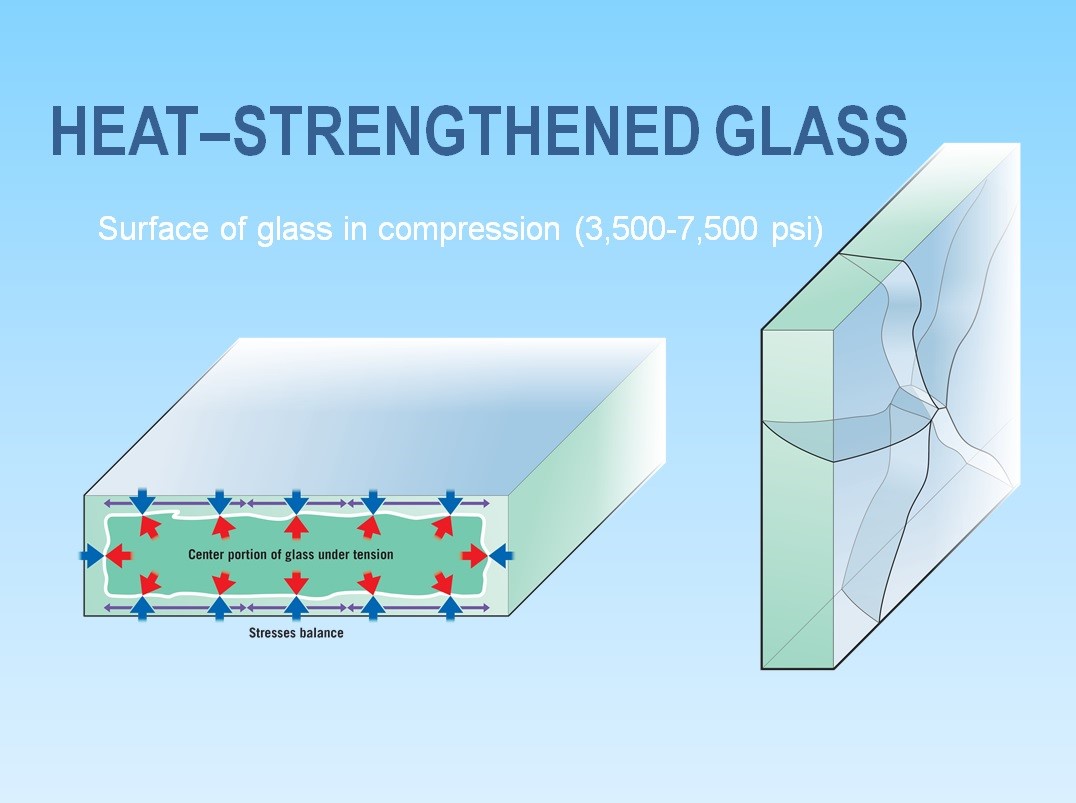
Quelle: https://glassed.vitroglazings.com/topics/heat-strengthened-vs-tempered-glass
Chemically Tempered Glass
Quelle: https://focuslcds.com/choosing-a-cover-glass-for-your-display/
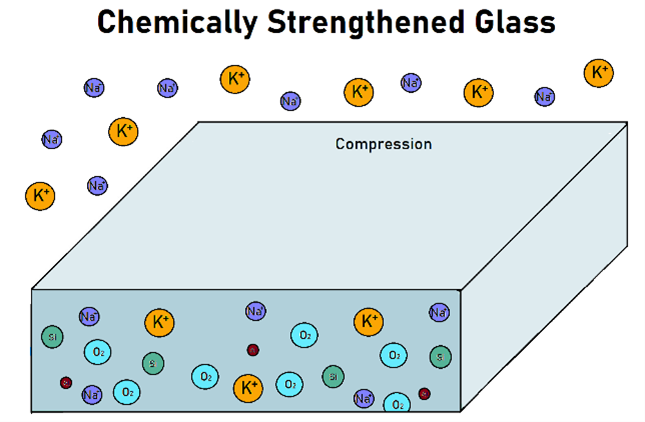
Chemically tempered glass is strengthened by the process of chemical bonding. The glass is immersed in chemicals at high heat, which allows ions to bond with the voids in the glass. The chemical process adds potassium bonds to the glass during this chemical reaction instead of the original sodium bonds.
Chemically tempered glass has the advantage of maintaining optical clarity during the tempering process, and it is as strong as heat tempered glass. It also differs from heat-treated glass, where slight distortion of the glass surface may occur. Chemically treated glass can be cut or drilled after treatment, while this is not possible with heat treated and heat tempered glass.
Known glass brands
Soda-lime glass is the most widely produced in the world and by various manufacturers. It is chemically treated and is a good option for LCDs that do not require additional protection of the glass. A standard soda-lime glass for an LCD has a hardness of about 5Mohs. This type of glass is not fragile and has normal durability, but it is not classified as extra strong display glass.
Gorilla glass 3 from Corning (USA) is chemically tempered aluminum silicate glass made by ion exchange. The glass is immersed in molten potassium salt at 400°C. Through this process, the potassium displaces the sodium atoms from the compound. This glass has high surface strength and is resistant to cracks and scratches. The hardness grade is 7Mohs.
Dragontrail-Glass from Asahi Glass (Japan) is similar to Gorilla Glass in that it is strengthened by chemical hardening. The hardness level of Dragontrail glass is 7Mohs, which is equivalent to Gorilla glass. With this hardness level, the glass is also scratch resistant. The glass can be very durable even with the minimum thickness.
All glasses can be obtained in the standardized thicknesses of 0.5mm, 0.7mm and 1.1mm as mother glasses in the market. Depending on the requirement, for example for a desired IK level, the manufacturing process for a specifically requested thickness must be examined in more detail.
Plastic materials
Depending on the application, a glass cover lens may be undesirable. For example in applications with high safety requirements, where even in the worst case no splinters are allowed. However, it is important to note that plastics as a material for cover lenses are generally not suitable for large temperature fluctuations. This is because the materials of LCD, optical or air-gap bonding and cover lenses bonded as display modules expand differently when exposed to temperature.
In addition, plastics are less durable under UV radiation compared to glass. The same applies to the printing of the cover lens, since there is a limited choice of printing methods. Especially for larger display modules and for outdoor use, we therefore do not recommend a design with plastic coverlens.
PC / Polycarbonate
PMMA / Acrylic
Conclusion
In general, it can be said that nowadays a glass cover lens is used in all industries and in most cases. This is not only due to the advantages mentioned above, but also from a price point of view. Due to the economies of scale in the production of cover lenses, they are usually cheaper to obtain than a plastic cover lens. Another point is the design aspect, especially the feel of the material. For this reason, glass is the preferred material, especially for high-end products. Nevertheless, both materials have their right to exist on the market and can play out their advantages depending on the application.